
Children do well when adults truly listen to them, value their ideas and respond in ways that help them feel safe and supported.
When parents, caregivers, community members and professionals use the Safer Communities for Children stories and resources, we can gain valuable insight into how children think, what worries them, and what they need from us to feel and be safe.
SAFER COMMUNITIES FOR CHILDREN is an approach to support children aged around 3-10 years to learn about safety, express their feelings, and share what helps them feel secure and safe in their families and communities.
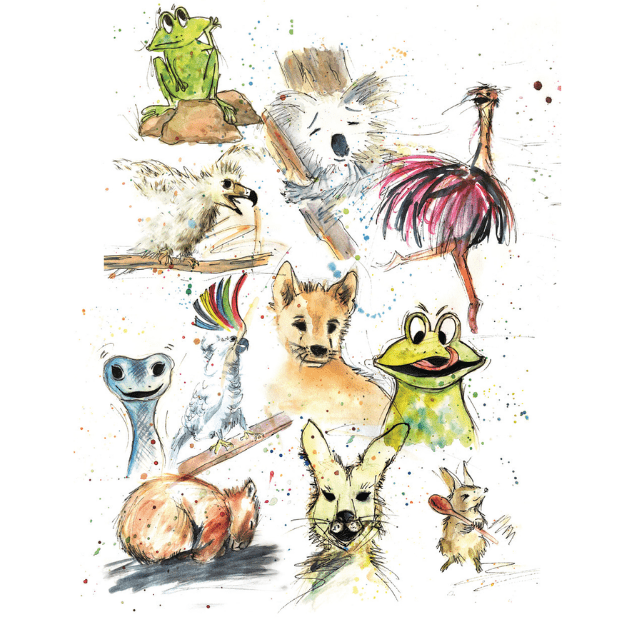
The approach is built around seven bush-animal stories with simple questions and activities that help explore concepts of safety, build confidence and resilience, and support children to seek help when they need it.
The focus of the approach is on children’s voices. The stories and activities invite children to express what helps them feel safe, while encouraging adults to listen and respond in meaningful, supportive and practical ways that support each child and community.
The stories share simple safety messages that emphasise the collective responsibility we all share to value and protect children.
They include “Something to think about” reflections for adults – simple prompts that help us consider how we can look out for children and strengthen safety in our homes, workplaces and communities.
This approach stands out because it:
The stories can be read to children by parents, caregivers, older children, educators, teachers, local community members, librarians and professionals – anyone who wants to gently engage with children around their wellbeing and safety.
They can be read in homes, schools, early childhood environments, family centres, outside school hours centres (OSHC) and community spaces in urban, rural and remote areas. Stories and activities can be adapted and translated to suit the needs of children and communities.


Safer Communities for Children can be used by people working with children and families to promote meaningful conversations and planning around the wellbeing and safety needs of children and to respond to children in supportive ways.
View these clips to learn more about the SCFC approach:
When run as a program with children, or in education or service-based settings, SCFC can help us to listen deeply to children, hear from them about their safety needs and respond in meaningful ways that increase their safety and wellbeing in line with the ten national principles for child safe organisations.
Each story in Safer Communities for Children has been aligned with the Early Years Learning Framework v 2.0 (EYLF v2.0) and the Australian Curriculum version 9.0 learning areas of Health and Physical Education, English, and the General Capabilities from Foundation to Years 3-4.
This alignment is not exhaustive, and educators may identify further connections with other learning areas such as Humanities and Social Sciences (HASS), The Arts, and Digital Technologies.
NAPCAN runs SCFC workshops in Queensland (Queensland Protective Behaviours Workshop) and the Northern Territory, and can consider requests for workshops in other regions.
Join us as we explore the Safer Communities for Children materials (along with a host of other resources) which you can adapt and use in your work with children and families.
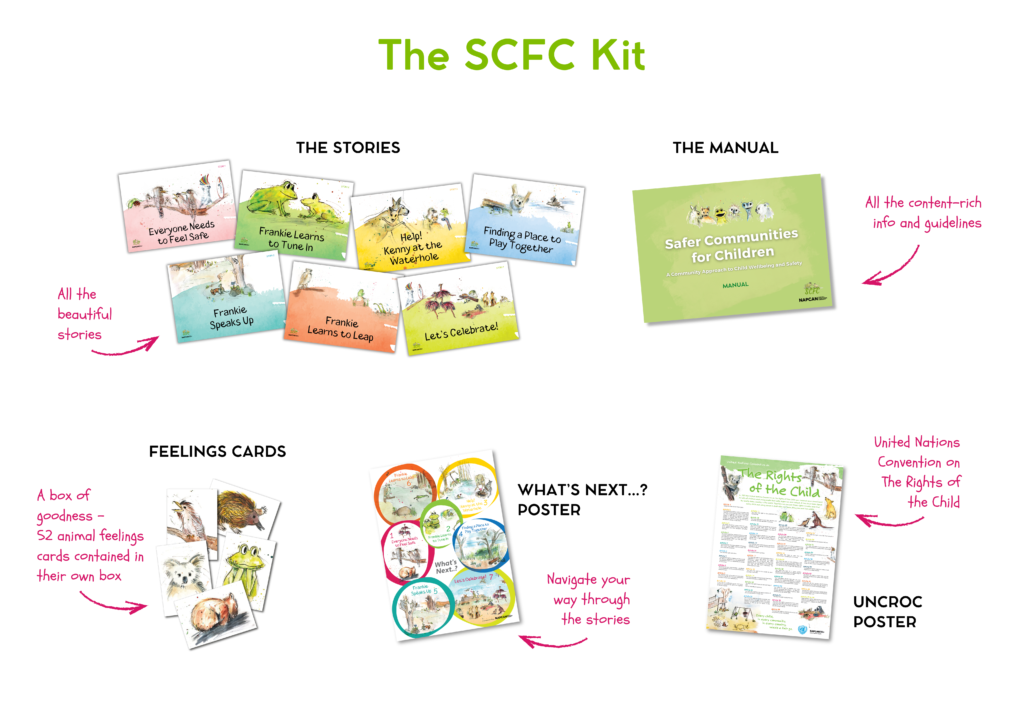
Learn more about SCFC and other NAPCAN programs.
Check out our scheduled workshops and book with us today.